
If you work on a traditional annual sales plan, you’re probably scrambling right now trying to put together a plan and budget for next year.
At the same time, you’re still responsible for finishing this year.
You’re looking at results, making assumptions about what’s coming, figuring out where growth will come from, deciding what your team needs to do differently, and trying to put numbers around all of it.
Then January arrives, the new plan officially begins, and you start working through it.
Something interesting happens as the year progresses.
Your twelve-month plan gets shorter.
Your Planning Horizon Keeps Shrinking
In January, you’re looking twelve months ahead. By April, you’re down to nine. By July, you’re looking at six months. By October, you have three months left in the plan while simultaneously trying to create another twelve-month plan for next year.
Which means right now you may be trying to lead the end of one plan while building the beginning of another.
I’ve never understood why we accept that as the natural way planning has to work.
- Your customers don’t necessarily reset on January 1st.
- Your salespeople don’t suddenly become different people.
- The skills you’re developing don’t conveniently reach completion on December 31st (wouldn’t that be nice).
- Opportunities in your pipeline certainly don’t care that you’ve reached the end of your planning calendar.
So why should your leadership plan?
There Are a Lot of Pieces to Keep Moving
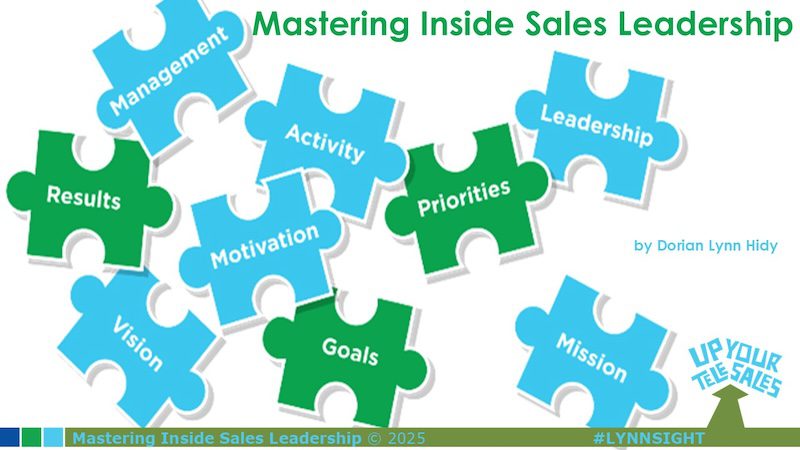
One of the reasons I use a puzzle throughout Mastering Inside Sales Leadership is because that’s what leading an inside sales team feels like to me.
You’re working with vision, leadership, management, motivation, goals, priorities, activity, and results. Each piece affects the others, and you’re rarely working on only one of them at a time. The book uses that puzzle picture deliberately: vision provides the image you’re building toward, while the other pieces have to fit together as the team and business change.
That’s difficult to do when your planning horizon keeps getting shorter.
If something needs six months of sustained attention and you discover it in September, it doesn’t magically become a four-month initiative because December is coming.
You need to be able to see beyond the border of a fiscal calendar.
What If You Always Looked Twelve Months Ahead?
Instead of allowing your planning horizon to shrink every month, keep extending it.
October doesn’t mean there are three months left in your plan. It means you’re looking at October through next September.
January doesn’t mean you throw out what you’ve been doing and start over. You look at January through December.
April becomes April through the following March.
You still work within your organization’s annual budgeting, forecasting, and goal-setting requirements. A rolling twelve-month view doesn’t replace any of that.
It gives you, as the inside sales leader, a planning horizon that doesn’t disappear as the year goes on. The book deliberately moves beyond arbitrary timeframes into rolling twelve-month planning for exactly that reason.
Keep Building the Picture
A rolling plan also gives you permission to adjust.
Your team will change. Business priorities will shift. Customers will surprise you. Something you thought would matter may become less important, while something you didn’t anticipate suddenly deserves your attention.
You don’t need to throw away the plan when that happens.
You move the pieces.
You keep the picture of where you’re going in front of you, decide what needs your attention next, and extend the planning horizon another month. Planning becomes part of how you lead instead of something you scramble to complete every fall.
So, while you’re working on next year’s plan and budget, look beyond the December sitting at the end of it.
Why should your sales plan end there?