
It’s October, which means many inside sales leaders are doing two jobs at once. They’re trying to finish the current year strong while building the sales plan, budget, and expectations for next year.
And somewhere in the middle of all that planning, the work of actually developing their salespeople still needs to happen.
I’ve watched leaders identify a skill gap in September, recognize that it’s going to take several months of coaching and practice to make a meaningful difference, and then struggle with where it fits because the current year’s plan is almost over.
Which is an interesting way to think about developing people.
Your salesperson doesn’t suddenly master discovery because December 31st arrived. An account you’ve been working to develop doesn’t become less important because the new fiscal year begins. And a coaching initiative that needs six months of consistent attention isn’t going to deliver results in three just because that’s how much calendar you have left.
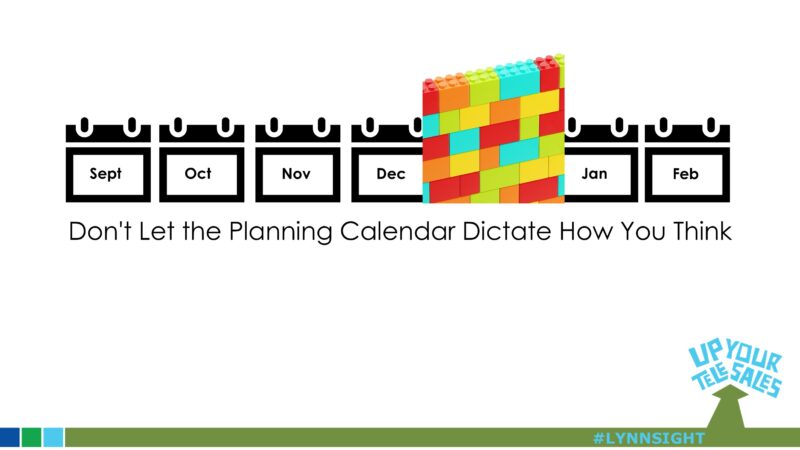
Yet we frequently allow the planning calendar to dictate how far ahead we’re thinking.
That’s one of the reasons I advocate for a rolling twelve-month leadership plan.
Instead of starting January with twelve months ahead of you and watching that planning horizon shrink as the year progresses, you continually extend it. In October, you’re planning through next September. In November, through the following October. Every month, you’re looking twelve months ahead.
You still have annual budgets, revenue targets, and organizational planning requirements. Those don’t disappear. But your leadership planning continues beyond them.
Think about what that changes when you’re evaluating your team’s development. If you identify a skill gap in September that requires six months of coaching, you can plan for six months of coaching. If you’re developing a strategic account that won’t produce meaningful results until next spring, it remains part of your plan.
And when January arrives, you’re continuing the work you’ve already determined matters, making adjustments based on what you’ve learned rather than automatically starting something new because the calendar changed.
As you’re building next year’s plan, take another look at what your team is already working on. Which activities, skills, and opportunities need continued attention beyond December? What have you started that deserves enough time to actually make a difference?
Your leadership responsibilities don’t reset when the calendar does.
Keep extending your planning horizon so the work that matters has time to deliver results.