
We’ve all had that moment.
You make the call. It goes to voicemail. And somewhere in the back of your mind you think: “Ugh… another one.”
A good voicemail can create curiosity, reinforce your professionalism, and leave a positive impression, even when the person doesn’t call you back.
And sometimes, success looks a lot simpler than a returned call.
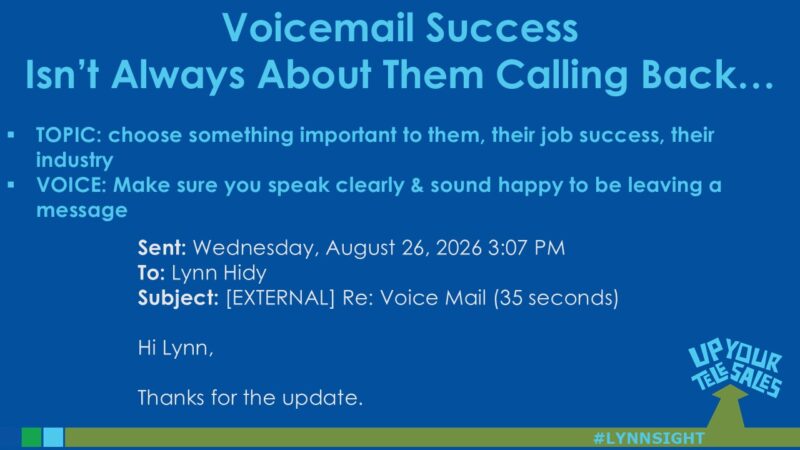
Sometimes it’s an email reply to the WAV file & transcription email they got from their phone system saying:
“Thanks for the update.”
That might not feel like a huge sales victory.
It’s an acknowledgement that you’re relevant!
Voicemail Success Starts With the Topic
Before you leave a message, ask yourself:
Why would they care about what I’m about to say?
Choose something that matters to them.
Something connected to:
- their job
- their business
- their industry
- a goal they’re working toward
- a problem they may be trying to solve
- something new or useful you can share
Your voicemail shouldn’t sound like: “Hi, I’m calling to follow up and see if you have time to talk.”
That’s about you wanting a conversation.
Instead, give them a reason to listen.
You might say:
“I saw [something happening] in [name their industry] that made me think …”
Or:
“I wanted to share a quick idea based [typical trigger event OR news item]…”
Now you’re leaving something useful behind.
Your Voice Matters More Than You Think
Sound like you’re actually happy to be leaving the message.
Yes, I mean smile while you’re talking.
People can hear your energy.
PLUS: Speak clearly and slow down. They can also hear when you’re rushing through your voicemail because you’ve already left 27 others today.
A voicemail shouldn’t sound like something you’re checking off your activity list.
It should sound like one person talking to another person.
Keep It Short
You do not need to tell them everything.
Your voicemail has one job: Give them enough information to make listening worthwhile.
Thirty to thirty-five seconds is plenty.
Try this structure:
Who you are.
Why you’re calling.
Something useful or relevant.
What you’d like to happen next.
That’s it.
A Simple 35-Second Voicemail
“Hi [Name], it’s [Your Name] with [Company].
I wanted to share a quick update about [something relevant to them], that might be useful based on [something you saw about the company OR someone else there told you].
[Name] I look forward to connecting # # # – # # # – # # # #.”
There is no attempt to cram the entire sales conversation into a voicemail.
Remember: Every Voicemail Is a Brand Moment
Even when someone doesn’t call you back, they’re forming an impression.
Do you sound prepared?
Relevant?
Confident?
Useful?
Easy to work with?
Five Quick Ways to Improve Your Next Voicemail
- Choose a topic they care about. Make it relevant to their world.
- Keep it to 30–35 seconds.
- Speak clearly and with energy. Sound like a real person who is glad to be reaching out.
- Demonstrate value. Give them an idea, update, insight, or useful next step.
- End positively.
Your LYNNSIGHT Challenge
Pay attention to the next five voicemails you leave.
Before you dial, ask yourself questions: Is this message about something that matters to them?
Then listen to your own delivery.
Are you clear?
Concise?
Relevant?
Positive?
Then ask: Would I respond?
Because voicemail success isn’t always about getting the callback.
Sometimes success is simply leaving the kind of message that makes someone think:
“That was worth listening to.”