
Inside sales leaders are very good at reacting. Sometimes too good.
A number slips, a forecast gets questioned, a quarter-end push arrives, and suddenly the beautiful plan gets shoved into a drawer while everyone sprints toward whatever is currently on fire.
That feels responsible in the moment. It also keeps the team in a start-stop pattern.
You get bursts of intensity, long stretches of drift, a few heroic saves, and then everyone wonders why the same problems are waiting at the next planning meeting, looking smug.
The problem is not that leaders do not plan. Most inside sales leaders plan plenty. They have goals, dashboards, initiatives, meetings, projects, and probably a spreadsheet with a name like “Final_Final_Updated_UseThisOne.”
The problem is that the plan does not always survive the inside sales hustle.
Month-end shows up. Quarter-end shows up. Forecast pressure shows up. A new executive priority shows up. Suddenly, the team is not being led by the plan anymore. They are being led by whatever is loudest.
That is where a rolling twelve-month approach helps.
This is not about ignoring deadlines.
Month-end, quarter-end, board expectations, forecasts, and revenue goals are real. Pretending they aren’t is wishful thinking with a calendar invite.
The point is that short-term pressure should not get to grab the whole steering wheel.
A rolling twelve-month plan gives inside sales leaders a way to keep building while still managing the pressure right in front of them. That is the shift: from heroics to cadence.
Why Rolling Twelve Months Beats the Old Model
Traditional planning loves clean boundaries: this month, this quarter, this year.
It looks organized. Underneath, it often traps teams in the cycle of now.
The team scrambles at the beginning of a quarter, coasts when urgency fades, and panics when the end comes back around. Strategy feels like a revolving door. Coaching becomes reactive. Forecasting turns into a performance for leadership instead of a thinking tool for the salesperson.
A rolling twelve-month plan changes the rhythm.
You do not wait for January. You do not wait for the fiscal year to behave itself. You start from where you are, build the next twelve months, and keep adding a month as each one passes.
Think of the calendar as a moving track.
January ends, so you add the next January.
March arrives with quarter-end pressure, so you adjust the balance instead of abandoning the plan. Maybe this month is 70 percent quarter-end execution and 30 percent long-term build. Maybe next month reverses that.
This is practical leadership; the point is that the long-term work never disappears.
When capacity is low, choose smaller long-term objectives. Analyze top accounts instead of overhauling segmentation. Gather pain-point data instead of launching a new market. In quieter months, push harder: hold territory reviews, run skill roundtables, clean up processes, or reset the environment so the desired behavior is easier to repeat.
Cadence does not mean everything gets equal attention every month.
It means nothing important gets forgotten just because something urgent got loud.
Pick One Focus Area at a Time
Inside sales leaders often see ten things that need fixing.
That does not mean the team can absorb ten changes at once! You cannot change everything at the same time.
Choose one focus area. It may be business growth: expanding current accounts, opening a new market, increasing new customer acquisition, improving margin, or launching a product set.
Or it may be team change: better qualification, stronger pre-call planning, earlier multi-threading, cleaner CRM use, faster response time, or more accurate forecasting.
One focus does not mean one priority forever. It means one change gets enough leadership and sales attention to stick.
That is how momentum gets built.
Once the focus is chosen, make sure you can answer three questions:
1. What exactly should the salesperson do?
2. Why should they care?
3. What can you change in the environment to make follow-through easier?
This is where leadership turns into usable direction.
A salesperson should be able to leave the conversation knowing what action to take next. Not the whole twelve-month strategy. Not a five-part transformation plan. Just the next useful behavior they can take when they are out of the meeting.
That matters because ambiguity slows people down.
If you tell a team to “be more strategic,” everyone nods and then goes back to doing whatever they already thought counted as strategic.
If you tell the team, “This month, our focus is identifying the top five expansion opportunities in each territory and building a next-step plan for each,” now they have something to work with.
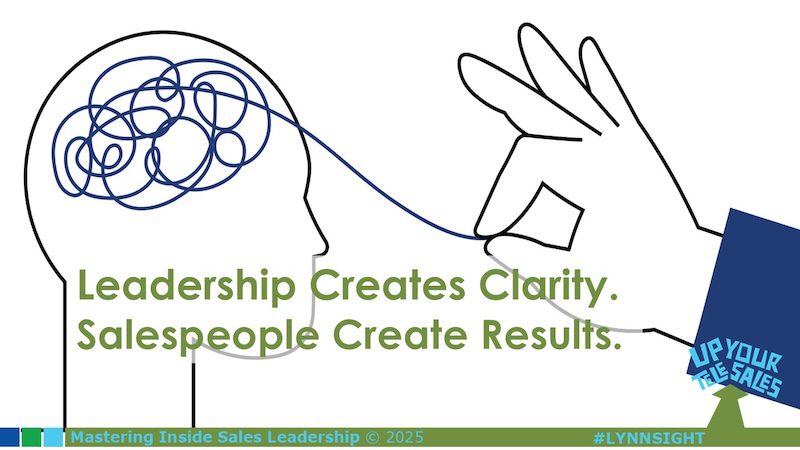
Leaders control the clarity.
Salespeople control the behavior.
Both matter.
The Weekly Hour That Keeps the Plan Alive
Most leaders do not need a more complicated planning system. They need one protected hour each week to keep the twelve-month cycle alive.
Use that hour to ask better questions:
- What did we set out to accomplish this month?
- Is it still the right goal?
- What did we learn?
- What needs adjustment?
- What does success look like thirty days from now?
- What could throw us off course?
- What is the next action that keeps us moving?
Then zoom out.
- Does the twelve-month arc still match the bigger direction?
- Are the timelines still realistic?
- Are you keeping the right balance between urgent revenue pressure and long-term team development?
This is where leadership becomes a habit.
There typically is no need for a dramatic reset. The weekly rhythm allows you to make minor shifts when needed.
Steadiness matters more than leaders realize.
Salespeople feel the difference.
When leaders operate with cadence, the team gets steadier direction. Reps know what matters. They know which behavior is being built. They know how their personal goals connect to team goals. They know the leader is not going to abandon the plan the first time the forecast gets uncomfortable.
What to Do This Week
Choose one focus area for the next month.
Make it specific enough that your team knows what behavior matters. If you cannot describe the behavior, you are not ready to coach it.
Then translate the plan into one action your salespeople can take right away.
Not a theme. Not a slogan. Not “be more proactive,” which is usually where useful coaching goes to nap.
One action.
Inside sales leadership is not about having one perfect plan. It is about creating the rhythm that keeps the right work visible, specific, and possible.
If you want the full leadership framework behind this twelve-month focus work, you can find it in Mastering Inside Sales Leadership on Amazon. The audiobook with me reading to you is available wherever you listen.