
More often than not, your team’s rhythm reflects your leadership rhythm.
If you plan in bursts, they’ll work in bursts. If you only talk about the future at the beginning of the quarter, they’ll learn that planning is something you dust off every 90 days. If every quarter-end wipes the plan off the table, they’ll believe urgency always outranks direction. And if your priorities shift every time the forecast gets uncomfortable, they’ll eventually stop committing until they see which initiative survives the week.
You’ve got a rhythm problem.
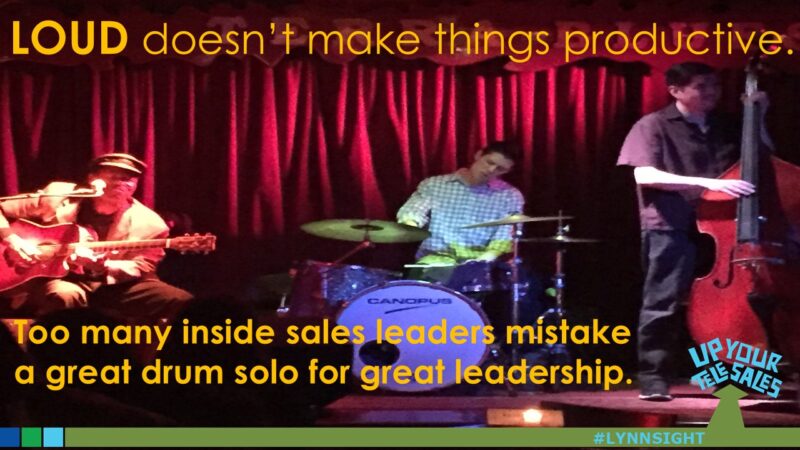
Too many inside sales leaders mistake a great drum solo for great leadership.
Quarter-end arrives. Everyone works longer. Managers jump into deals. Forecast meetings multiply. Slack lights up. Every conversation suddenly becomes “critical.” It feels productive because it’s loud. Like a drum solo, it grabs everyone’s attention.
People don’t buy a ticket to hear ninety minutes of drum solos. (Well…unless the drummer is Neil Peart, Max Roach, or one of a very select few.)
People come for the concert.
A great concert is memorable because everyone understands the rhythm and can hear the melody. Every player knows when to come in, when to support someone else, and when to carry the tune. The audience experiences something bigger than any single performance because the rhythm never disappears.
Great leadership works exactly the same way.
Month-end matters. Quarter-end matters. Forecasts matter. No one is suggesting you ignore the numbers and go do a trust fall with your strategic plan. Please don’t.
The real question is whether your leadership creates a rhythm your team can follow long after the quarter-end scramble is over. When urgent always replaces the important, your team starts believing the plan is temporary. They stop building momentum because experience has taught them another priority will replace this one soon enough.
That’s when leadership begins to feel like a series of impressive drum solos instead of a complete performance.
This week, take an honest look at your own leadership rhythm. Not your intentions, those are probably beautiful melodies. Look at what your team actually experiences every day.
Do they know the one focus that matters most right now? Do they know which behaviors you want repeated every week? Do they know what still matters when quarter-end gets loud? (It always does.)
If they don’t, it may simply be that you’ve become very good at leading drum solos…
…when your team has been waiting for a concert.